Best Time to Visit Tanzania: Seasons, Regions & Activities
The Best Time to Visit Tanzania — By Season
Understanding Tanzania's distinct seasons helps you plan the ideal balance of wildlife viewing, weather comfort, and budget.
When is the High Season?
The high season in Tanzania runs from July to March with a short rainy break in November. However, in the wildlife parks to the south and west of Tanzania the high season runs from June to October.
During the high season accommodation prices can be higher. Our goal is to plan for and provide guests with intimate experiences, but bear in mind that this will be the peak travel period to Tanzania's most famous game parks.
If you are looking for a more secluded safari, one of our country experts can help you choose less visited parks to the south or west of Tanzania. Or, if you are on a budget, you could consider one of our intimate group tours, which provides you with the same amazing experience at a reduced cost.
When is the Low Season?
The low season, brought about by the long rains, occurs in Tanzania from April to May. With the abundance of available grass, the wildlife becomes harder to see as it moves further away from its dry-season water sources. However, the green vibrant landscape with a wealth of migratory birds certainly makes up for this.
Camps to the north tend to remain open. However some of the accommodations in southern Tanzania can close during this period. The Zanzibar archipelago can receive large amounts of heavy rain, which makes a dream beach holiday less advisable in these months.
Prices are substantially lower during this period and if you are open to suggestions from our local safari experts, we can help you plan a unique experience to Tanzania during the low season.
When is the Dry Season?
The dry season in Tanzania occurs from June to October and it is the best time to visit Tanzania overall.
Inland, and depending on where you would like to visit, you can expect to experience dry day-time temperatures ranging from 20°C/68°F to 30°C/86°F. Surprisingly, temperatures can fall rapidly at night, so don't forget to pack warm clothes for when you partake in an early morning game drive. If at altitude, such as the rim of Ngorongoro crater or Mount Kilimanjaro, temperatures will be much lower.
In general, there is very little rain, low levels of humidity and beautiful blue skies during this season.
The Tanzania coastline and the Zanzibar archipelago has a tropical climate. The best time to visit Zanzibar is also during the dry season, due to low humidity, warm weather and low chance of rain. The dry season has the perfect weather for your post-safari beach destination.
When is the Rainy Season?
Tanzania experiences two rainy seasons: the short and the long rains. Both influence the best time to visit Tanzania, however, the long rains will have the greatest impact on a safari, trek, climb or beach holiday.
• The Short Rains (November to December): Often unpredictable, it creates a flush of green growth and it is a beautiful time to visit Tanzania. Returning migratory birds are another highlight.
• The Short Dry Break (January to February): Experiences a break from the rain and coincides with the start of the wildebeest calving season in Southern Serengeti. Low-season prices are on offer in some southern parks, making this period one of the best times to visit.
• The Long Rains (March to May): Brought inland by south-east trade winds carrying moisture. Often coming in bursts, heavy afternoon rain can be expected nearly every day.
The Best Time to Visit Tanzania — By Region
Tanzania's diverse geography means each national park and region has unique seasonal highlights:
Serengeti National Park
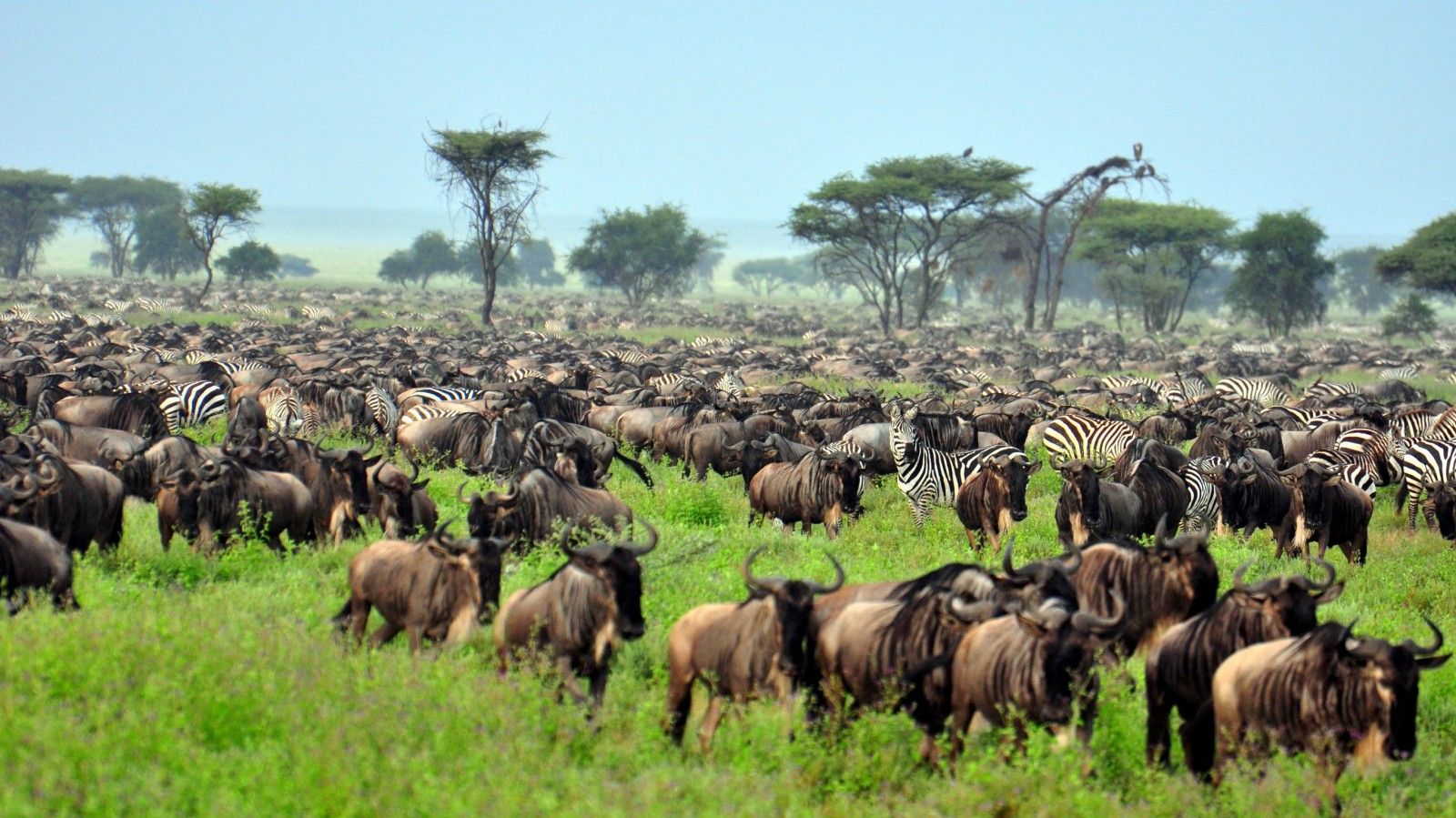
The best time to visit the Serengeti National Park and to see the Great Wildebeest Migration is from June to October. To see 2 million animals (including zebra and gazelle) moving through the landscape can take your breath away. Inevitably, large numbers of herbivores attract condensed populations of predators. The drama played out through the plains and particularly the river crossings is enthralling. It is a true, once-in-a-lifetime opportunity. Please be aware that it can get quite busy with safari vehicles and visitors during this time.
In November to December, a flush of green growth triggers the wildebeest in the north to return from Kenya's Masai Mara to the Serengeti National Park. An endless horizon of grassland, interspersed by islands of rocky outcrops called kopjes, makes this an incredible time to visit the park.
From January to February, the park becomes a grassland nursery for thousands of wildebeest and consequently the wildebeest calving season begins in Southern Serengeti (Ndutu). New life emerging on the great plains is an opportunity to view large numbers of predators and creates a spectacle that will play on all of your senses.
Despite being the rainy season, it is still possible to visit the park in March to April. Territorial predators remain in the park year-round and sedentary wildlife still can be seen in this period.
The wildebeest rut, or mating season, takes place in May to June. As long columns of wildebeest make their way through the landscape, males clash heads in a battle for females. Often distracted with more than two males in the mix, they can be taken as prey by waiting lions and leopards.
Tarangire National Park
The best time to visit Tarangire National Park is from June to October. The dry season makes the curving Tarangire River one of the only water sources for hundreds of miles around; consequently, wildlife flocks there. During this time a mini wildebeest migration occurs, and the park becomes an elephant lover's paradise as hundreds of elephants congregate along the river.
The short rains from November to December turn the park green. Bird watching is fantastic as the arrival of migratory birds commences. At its peak, 550 bird species have been recorded in the park.
January to February experiences a period of dry weather. The landscape provides a beautiful backdrop to the hundreds of ginormous baobab trees and game viewing is still excellent.
In March to May, wildlife wanders away from the river into the surrounding wilderness; game viewing is less concentrated and some accommodation inside the park closes.
Ngorongoro Crater
Ngorongoro Crater is visitable all year round thanks to large numbers of resident animals that never leave the caldera. Crater floor temperatures range from 20°C/68°F to 25°C/77°F throughout the year; however, temperatures fall dramatically at night on the crater rim.
The best time to visit Ngorongoro Crater is June to October, because shorter grass during the dry season makes for exceptional game viewing and easy spotting of endangered black rhinos. Please be aware that there will be quite a high number of safari vehicles and visitors in the Crater during this peak period.
The short rains in November to December have minimal impact on a safari to Ngorongoro Crater and game viewing remains excellent.
The short dry period in January to February is one of the best times to visit if you want to experience the nearby wildebeest calving season.
Game viewing in the rainy season (March to May) is more challenging due to cloud and mist at the crater rim, but you can still expect to see an array of wildlife with fewer vehicles and lower rates.
Southern Tanzania (Nyerere & Ruaha)
The best time to visit southern Tanzania is the dry season from June to November as game viewing is extraordinary. Large numbers of animals, particularly elephants, gather near water sources (Rufiji River and Great Ruaha River) and predators like lions, cheetahs, hyenas, and leopards await them. It is also possible to see unique species like Sable and Roan antelope and rare African wild dogs. The average dry season temperature is 27°C/80°F — June being the coolest and October the hottest.
The rainy season in southern Tanzania is from December to March (longer than in the north). Generally, it rains in the heat of the afternoon. Heavy rain can make some park tracks inaccessible, but it is a lush, scenic time with attractive low-season rates. Good planning is essential as some camps close in April and May.
The Best Time to Visit Tanzania — By Activity
Matching your travel dates with your preferred holiday activities ensures an optimal itinerary:
Safaris and Game Viewing
The best time to enjoy a safari and view game in Tanzania is June to October. During this time hundreds of herbivores gather near water sources and dense numbers of predators wait for them.
The Great Wildebeest Migration occurs during the dry season, and in July the famous Mara River crossings take place. Other important migration highlights include January to February for the calving season in Ndutu, and May to June for the rut (mating season).
January and February are dry months with fewer visitors in the national parks — a fantastic time for a safari! Perfect safari weather occurs during the dry season with low humidity and temperatures ranging from 20°C (68°F) to 30°C (86°F), with cool mornings and evenings.
Bird watchers will enjoy resident species in the dry season and the influx of European and Asian migratory birds from November to April.
Kilimanjaro Trekking
The best time to trek Mount Kilimanjaro is the dry season from June to October, or from January to February when the weather is also dry and skies are clear. These two dry windows are the optimum periods to climb.
However, this is also peak season on the mountain, so if you wish to avoid the crowds, consider shoulder periods such as early March, late October, or choose quieter routes like the Northern Circuit or Rongai.
March to May is the wet season with heavy cloud and slippery trails, and trekking is generally not recommended during those months.
Beach Holiday on Zanzibar
The best time for a beach holiday on Zanzibar is June to October. Crystal clear seas, coconut palms bowing over white sandy beaches, low humidity, and warm sunny weather combine for the dream tropical escape.
Snorkeling and diving on the coral reefs can be incredible from June to February. January to March is prime diving season with calm seas and excellent visibility. Plan your diving in September to coincide with hatching sea turtles, or December if you want to share the warm ocean with migrating whale sharks.
If you enjoy heat and tropical warmth, January and February are great months. March to May is the rainy season and is best avoided for dedicated beach holidays.
Our Expert Advice: Low & Shoulder Seasons
While June to October is widely considered the best time to visit Tanzania, these are also the busiest months of the year.
If you are looking for a truly secluded experience, leaving the rest of the world behind, consider traveling during the low or shoulder season (November, January–February, or early March).
If you travel during high season, you can also venture to less visited southern parks such as Nyerere National Park and Ruaha National Park for exceptional, undisturbed game viewing with few other safari vehicles.
Ready to plan your Tanzania trip?
Get a tailored safari itinerary & free quote today.
Frequently Asked Questions
When is the Great Migration river crossing in Serengeti?
River crossings across the Mara River typically take place between July and October in Northern Serengeti, while Grumeti River crossings occur around mid-May to June.
What is the cheapest time to visit Tanzania?
The low season from April to May during the long rains offers the lowest lodge prices and group safari rates, along with fewer crowds in northern parks.
Is January and February a good time for a safari?
Yes! January and February are dry, warm months that coincide with the spectacular wildebeest calving season in Southern Serengeti, offering dramatic predator action and excellent weather.
When is the best time to combine a safari with Zanzibar?
June to October and January to February offer the ideal combination of prime savannah game viewing and dry, sunny beach weather on Zanzibar.
Related Travel Guides
Discover Tanzania with Earth Specialist Safaris
From the wildlife-rich plains of Serengeti and Ngorongoro to the summit of Mount Kilimanjaro and the tropical beaches of Zanzibar, Tanzania offers extraordinary experiences for every type of traveler.
Safari • Kilimanjaro • Culture • Zanzibar • Beach Holidays • Private Tours