Tanzania Culture & Languages: People, Traditions & Cuisine
Tanzania's Languages
When Tanzania gained independence in 1961, one of its foundational national principles was that there should never be one dominant ethnic group. Consequently, the language Swahili or Kiswahili (the local term) was successfully established as a unifying national tool to bring together all 129 ethnic groups. Today, Tanzania is one of the only sub-Saharan African countries to use an indigenous language throughout its primary education system.
Historical trade between Arab merchants and Bantu communities along the East African coast led to the formation of Swahili, which is predominantly a merger of several Bantu languages with Arabic vocabulary. Originally written in Arabic script, Swahili helped the Islamic religion spread along the coast. Later, the alphabet was changed to the Latin script during the German and British colonial eras in East Africa.
Language Use in Daily Life & Greetings
Swahili is Tanzania's official national language, and English is used alongside it in commerce, higher education, and administration. Most Tanzanians speak at least two languages — their mother tribal tongue and Swahili — and many speak English as their third language. When traveling through Tanzania, you will hear Swahili and English spoken everywhere.
Greetings are an essential cornerstone of Tanzanian culture. Inquiring about how someone and their family are doing is considered basic politeness before any business or conversation begins. Handshakes often last longer than in Western cultures, held gently throughout the greeting as a sign of warmth and friendship.
Tanzanians treat the elderly with deep respect. To greet an older person respectfully, say 'Shikamoo' (literally meaning 'I hold your feet with respect'), to which they will warmly reply 'Marahaba' ('I accept your respect').
- Jambo / Hujambo — Hello / How are you?
- Habari / Habari gani? — How are things? / What's the news?
- Mzuri sana — Very good
- Asante sana — Thank you very much
- Karibu sana — You are very welcome
- Shikamoo (to elders) → Marahaba (their reply)
Tanzania Religions & Beliefs
Tanzania enjoys complete religious freedom and peaceful coexistence. Christianity (approximately 63% of the population) and Islam (approximately 34%) are the two predominant faiths. Around 1.2% follow traditional indigenous animist religions, and 1.8% are non-affiliated.
Mainland Tanzania has a vibrant mix of Christian and Muslim communities, while the coastal areas and Zanzibar archipelago are predominantly Muslim (over 95% in Zanzibar), shaping the rich Swahili architecture, call to prayer, and modest dress customs.
Tanzania Dress Code & Cultural Etiquette
Tanzanian society tends toward a modest, conservative style of dress. Traditionally, women wear long skirts or dresses that cover the knees and shoulders.
In Zanzibar and coastal Swahili towns, there is a respected dress code: visitors should ensure shoulders, chests, and knees are covered when walking through Stone Town, local villages, and markets. Swimwear is welcomed on resort beaches and at lodge swimming pools, but not in public village streets.
Along the coast you will discover colorful traditional fabrics: the 'Kikoi' (a woven rectangular cotton sarong traditionally worn by men) and the 'Kanga' (a colorful printed cloth worn by women, always featuring a Swahili proverb or message along its border).
Cultural Groups: The Maasai
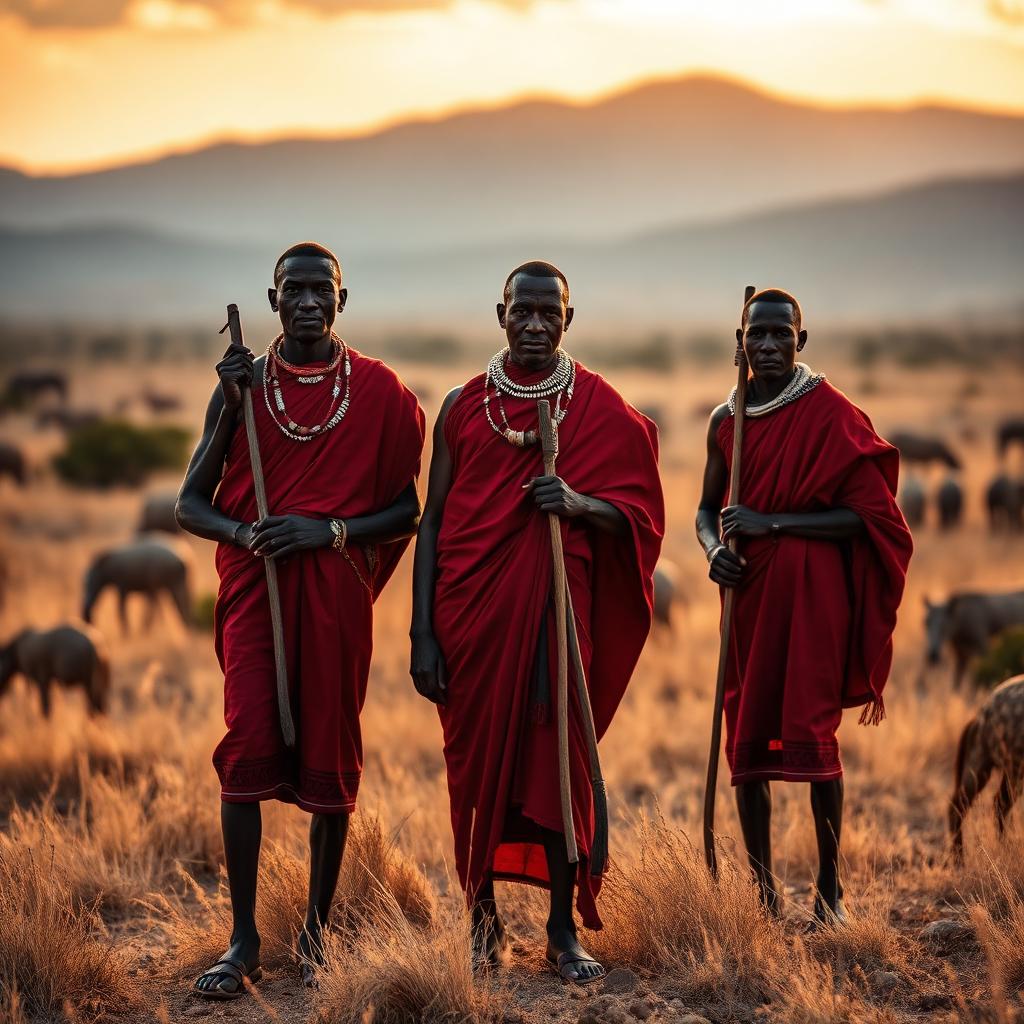
Out of the plethora of tribal groups in Tanzania, one of the most iconic is the Maasai of northern Tanzania. Despite modern life, the Maasai have held firmly to their pastoral traditions, ceremonies, and distinctive red shúkà clothing.
As semi-nomadic pastoralists, the Maasai move their livestock in harmony with seasonal rains in search of fresh grazing. When establishing in a new area, they construct a 'Manyatta' — a cluster of small circular huts made of mud, sticks, thatch, and cow dung, surrounded by a dense fence of sharp acacia thorn branches to protect cattle from lions and hyenas.
Cattle are central to Maasai life, culture, and economy. Believed to have been gifted directly from heaven by their god Enkai for safekeeping, cattle provide milk, meat, and blood, and represent the ultimate measure of wealth and social standing.
The Maasai speak 'Maa', an Eastern Nilotic language spoken by over 800,000 people across northern Tanzania and southern Kenya.
Today, innovative community conservation projects such as the Enonkishu Conservancy unite Maasai herds into planned rotational grazing systems that mimic wild wildebeest herds, allowing degraded grasslands to regenerate and benefiting both cattle and wildlife.
Cultural Groups: The Hadzabe
The Hadzabe (or Hadza) are an ancient indigenous tribe of hunter-gatherers living around Lake Eyasi, approximately 75 kilometres south of the Ngorongoro Crater. Descendants of Africa's original hunter-gatherers, their way of life has persisted largely unchanged for tens of thousands of years.
They live in small egalitarian groups of around twenty people with no formal chiefs or hierarchy, sharing all gathered food and game equally. Hadzabe men hunt baboons, antelopes, and birds using handmade wooden bows with poisoned arrows, while women forage for wild berries, baobab fruit, edible tubers, and liquid gold honey from aggressive wild African bees.
They build temporary grass dome shelters and relocate camp when seasonal game moves or local conflicts arise. Their language, Hadzane, is a unique click language featuring clicks, pops, and tonal chatter that is not genealogically linked to any other living language family.
Today, only about 1,200 Hadzabe remain, with an estimated 400 still living fully traditional hunter-gatherer lives. Respectful, ethical cultural visits with Earth Specialist Safaris support community land rights and provide sustainable revenue to protect their ancestral foraging territory.
National Cuisine & Traditional Dishes
Tanzanian cuisine is hearty, wholesome, and built on farm-fresh local produce. Carbohydrates form the core of daily meals:
• Ugali: A stiff, smooth porridge made of maize flour and water, stirred slowly to a mashed potato consistency. Eaten by hand: break off a small morsel, roll it into a ball, make an indentation with your thumb, and use it to scoop up sauces and side dishes.
• Sukuma Wiki: Braised collard greens seasoned with onions, tomatoes, coriander, and cumin (the Swahili name means 'stretch the week').
• Nyama Choma: Freshly grilled goat, beef, or chicken cooked slowly over open wood or charcoal embers, seasoned simply with salt and lime.
• Mkuzi wa Samaki & Mkuzi wa Kuku: Flavorful fish or chicken stews simmered with garlic, ginger, tomatoes, spices, and coconut milk.
• Mchemsho: A special celebratory boiled meat and vegetable dish (from the verb 'kuchemsha', to boil) packed with potatoes, cabbage, carrots, plantains, and tender beef.
• Wali wa Nazi: Fragrant white rice cooked in fresh coconut milk.
• Ndizi Kaanga & Ndizi Mshale: Green cooking bananas and plantains, fried or stewed in rich coconut and meat broths.
• Mandazi: Lightly sweetened, triangular deep-fried dough infused with cardamom and coconut milk, enjoyed with morning spiced chai.
Fusion Food & Coastal Seafood Paradise
Thanks to centuries of Arab, Indian, and Portuguese maritime trade along the Swahili coast, Tanzanian coastal food is a world-class fusion of fragrant spices and tropical ingredients:
• Kuku Paka: Chicken grilled over charcoal, then simmered in a rich, velvety coconut curry with turmeric, chili, and lime.
• Mchuzi wa Biringani: Deep-fried eggplant curry stewed with tomatoes, spices, and tamarind.
• Zanzibar Pizza (Murtabak): A thin, crispy fried flatbread stuffed with minced spiced beef or chicken, egg, laughing cow cheese, mayonnaise, and vegetables, fried on a hot griddle in Stone Town's night markets.
• Indian Ocean Seafood: Zanzibar and the coast produce world-class seafood including Red Snapper, Yellowtail Tuna, Kingfish, rock lobster, prawns, calamari, and mangrove crab.
• Freshwater Fish: Inland lakes in the Great Rift Valley supply fresh Tilapia and Nile Perch, frequently served whole with spicy tomato gravy.
Ready to plan your Tanzania trip?
Get a tailored safari itinerary & free quote today.
Frequently Asked Questions
Do I need to speak Swahili when visiting Tanzania?
No, English is widely spoken in tourism, hotels, and national parks. However, learning a few basic Swahili words like 'Jambo', 'Asante sana', and 'Karibu' is deeply appreciated by local Tanzanians.
What is the dress code in Zanzibar?
In public areas, Stone Town alleys, and local villages, visitors should dress modestly with shoulders and knees covered. Swimwear and shorts are fine on resort beaches.
Is it ethical to visit Maasai and Hadzabe communities?
Yes, when booked through responsible local operators like Earth Specialist Safaris that work directly with community elders, ensure fair compensation, and respect indigenous dignity and land rights.
Related Travel Guides
Tanzania Travel Guide: Everything You Need to Know
Read Article →Cost & BudgetTanzania Safari Cost, Money & Tipping Guide
Read Article →Safari PlanningBest Time to Visit Tanzania: Seasons, Regions & Activities
Read Article →Zanzibar Travel GuideZanzibar Travel Guide — Everything You Need to Know Before Visiting
Read Article →Discover Tanzania with Earth Specialist Safaris
From the wildlife-rich plains of Serengeti and Ngorongoro to the summit of Mount Kilimanjaro and the tropical beaches of Zanzibar, Tanzania offers extraordinary experiences for every type of traveler.
Safari • Kilimanjaro • Culture • Zanzibar • Beach Holidays • Private Tours