Wildlife and Birds: Animals in Tanzania
Where to See The Big Five in Tanzania
The term 'Big Five' originally coined by colonial big-game hunters refers to the five most challenging animals to hunt on foot: Lion, Leopard, Elephant, Black Rhino, and African Buffalo. Today, spotting all five on a photographic safari is the ultimate wildlife accomplishment.
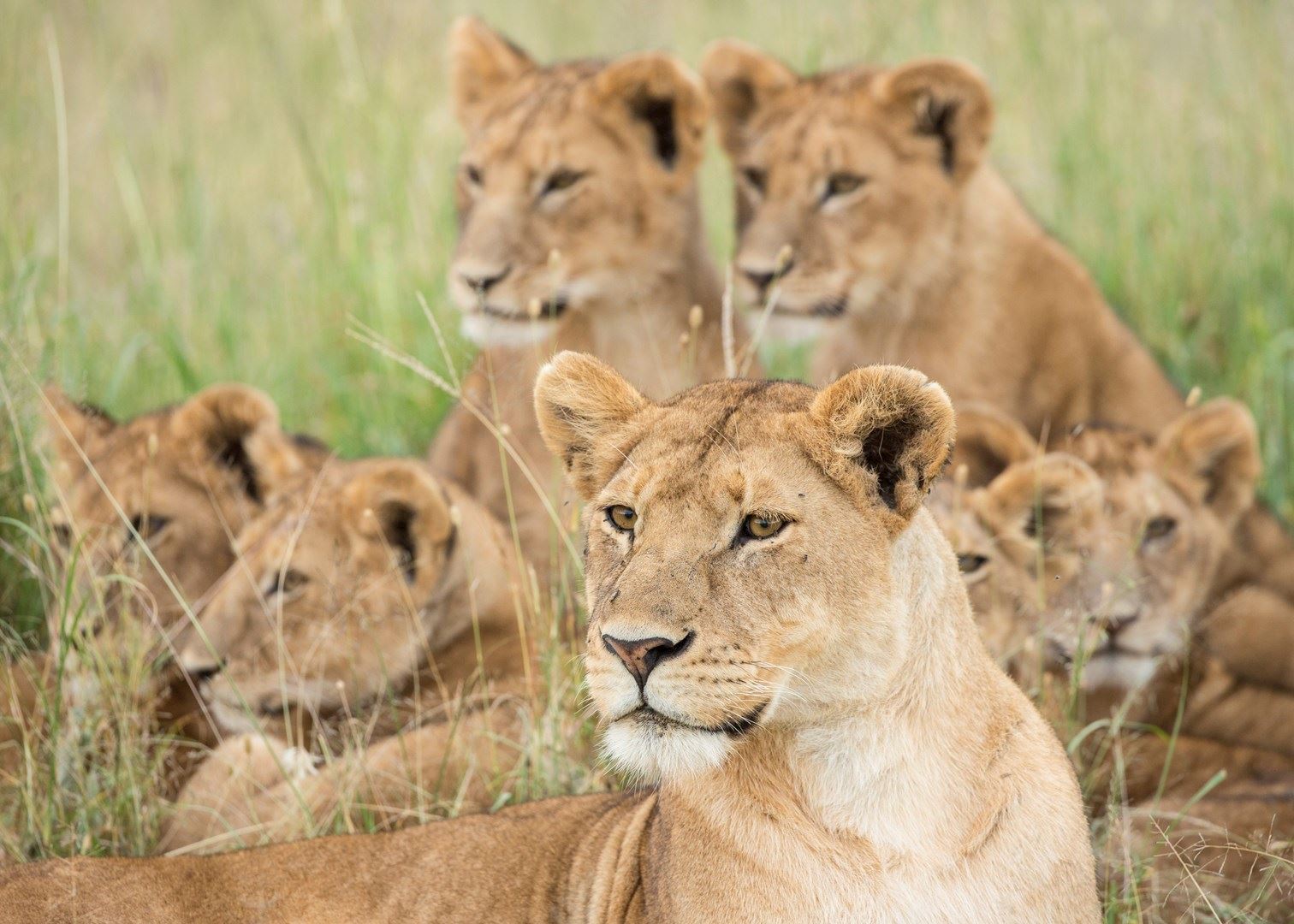
1. Lion (Simba)
Lion sightings are unforgettable. In their presence you instantly appreciate their size, hunting intelligence, and close family dynamics. While lion populations have declined across Africa, Tanzania remains their greatest stronghold on the continent.
• Ruaha National Park: Home to 10% of the world's remaining wild lions, featuring massive super-prides of 20+ individuals hunting along the river during the dry season.
• Serengeti National Park: Hosts approximately 3,000 lions across ~24 resident prides, frequently spotted lounging on granite kopjes or trailing migration herds.
• Ngorongoro Crater: The caldera floor hosts around 5 resident prides in a compact area, offering almost guaranteed close-range encounters.
• Katavi National Park: Few visitors mean Katavi's lions are wild, powerful, and unhabituated, frequently taking down large cape buffaloes.
2. Leopard (Chui)
Due to their solitary behavior, nocturnal habits, and masterful camouflage, leopards are the most elusive of the big cats. With expert safari guides, your chances are best in:
• Serengeti National Park: The Seronera River Valley is world-famous for leopard sightings resting in sausage trees and acacia branches.
• Ruaha National Park: Riverine forests along the Great Ruaha River provide prime leopard territories.
• Tarangire National Park & Ngorongoro Crater: Excellent rocky ledges and baobabs where leopards cache their prey away from hyenas.
3. Elephant (Tembo)
The deep low-frequency rumble of an elephant resonates through your body. Look into their eyes for an unquestionable understanding of their famed intelligence.
• Tarangire National Park: Famous as Tanzania's elephant paradise. During the dry season (June–October), herds of 200 to 300 elephants gather along the Tarangire River.
• Ruaha National Park: Hosts one of East Africa's largest elephant populations, with vast herds traversing the dry riverbeds.
• Serengeti & Lake Manyara: Healthy, protected populations living among lush groundwater forests and open plains.
4. Black Rhino (Kifaru)
The black rhino is one of Africa's rarest and most endangered mammals. In Tanzania, dedicated conservation programs are protecting and rebuilding populations:
• Ngorongoro Crater: The premier location to see wild black rhinos in Tanzania. The open caldera floor provides unobstructed views of resident rhinos grazing on the plains.
• Mkomazi National Park: Home to the highly successful Mkomazi Rhino Sanctuary operating since 1989.
• Serengeti National Park & Nyerere National Park: Small, recovering populations that are tracked in remote wilderness sectors during the dry season.
5. African Buffalo (Nyati)
Large, powerful, and imposing, the African buffalo is formidable with few natural predators other than lion prides.
• Katavi National Park: Immense mega-herds numbering over 1,000 buffaloes congregate along the Katuma River during the dry season.
• Nyerere National Park: Large herds grazing along the Rufiji River wetlands.
• Mikumi National Park: Accessible floodplains where buffalos graze openly alongside zebras.
Mammals of the Savannah Plains
Beyond the Big Five, Tanzania's ecosystems support a spectacular variety of herbivores and carnivores:
Giraffe (Twiga)
The national animal of Tanzania. Seeing a tower of giraffes galloping gracefully across the acacia savannah is unforgettable. You will see healthy populations in Serengeti, Mikumi, and Arusha National Park.
Fun Fact: There are NO giraffes inside Ngorongoro Crater floor — the crater walls are too steep for their long, delicate legs to descend into the caldera!
Hippo (Kiboko)
Seen in rivers and pools across nearly every park. For the ultimate hippo spectacle, visit Katavi National Park in October, where hundreds of hippos crowd into deep mud pools alongside giant Nile crocodiles.
Wildebeest & Antelopes
Over 1.5 million wildebeest drive the Great Migration alongside zebras. Other antelopes include the giant Eland (Africa's largest antelope), Greater Kudu with spiral horns, rare Sable and Roan antelopes in Ruaha, Lichtenstein's hartebeest, and the tiny, charismatic Dik-dik that mates for life.
Zebras (Pundamilia) & Cheetahs (Duma)
• Zebra: Companions of the wildebeest migration whose striped coats create optical confusion for predators.
• Cheetah: The fastest land mammal on Earth. Cheetahs emit a distinctive bird-like chirp to communicate with cubs. The Serengeti plains and Ngorongoro conservation area offer the premier cheetah viewing in Africa.
Iconic Birds of Tanzania
With over 1,100 species recorded, Tanzania is a world-class birding paradise:
- Lilac-Breasted Roller: A dazzling rainbow icon of the savannah with pastel blues, greens, and lilac plumage.
- Great White Pelican: Enormous birds with giant yellow throat pouches, found in massive flocks at Lake Manyara, Serengeti, and Ngorongoro.
- Marabou Stork: Dubbed 'the undertaker bird', this giant stork plays a crucial ecological cleanup role clearing carrion from the ecosystem.
- Hadada Ibis: Known for its unmistakable loud, trumpeting morning call and iridescent green wing covert feathers.
- African Fish Eagle: Iconic raptor with a snowy white head and chest, perched beside rivers and emitting the evocative 'Voice of Africa' cry.
Ready to plan your Tanzania trip?
Get a tailored safari itinerary & free quote today.
Frequently Asked Questions
Can I see all of the Big Five in one day in Tanzania?
Yes! In Ngorongoro Crater, the enclosed caldera allows visitors to frequently spot all five members of the Big Five (Lion, Leopard, Elephant, Rhino, and Buffalo) in a single morning game drive.
Why are there no giraffes inside Ngorongoro Crater?
The crater walls are extremely steep (600 meters) with dense forest, making it physically dangerous for tall, top-heavy giraffes to navigate down to the crater floor.
When is the best season for birdwatching in Tanzania?
November to April is prime birding season, when European and North African migratory birds arrive to join resident breeding species in lush breeding plumage.
Related Travel Guides
Discover Tanzania with Earth Specialist Safaris
From the wildlife-rich plains of Serengeti and Ngorongoro to the summit of Mount Kilimanjaro and the tropical beaches of Zanzibar, Tanzania offers extraordinary experiences for every type of traveler.
Safari • Kilimanjaro • Culture • Zanzibar • Beach Holidays • Private Tours